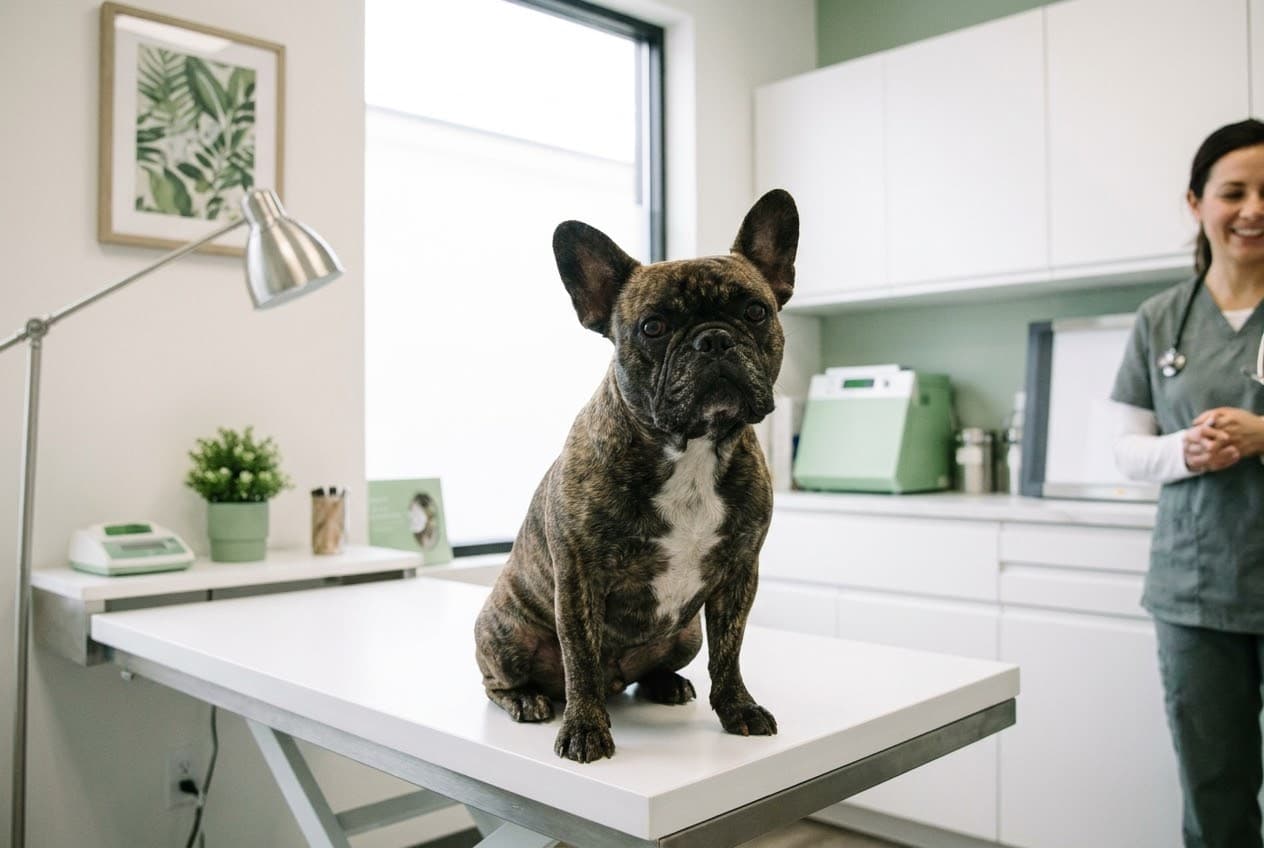

The French Bulldog has been in the top ten most popular breeds in Germany for years. We see one in our practice almost every day. There are two reasons for that: there are a lot of them, and they come with specific health challenges that need attentive care. This article is not here to run the breed down - it is here to help you live with one responsibly.
Understanding brachycephaly - the core of many issues
The word sounds technical, but it explains most of the picture. Brachycephalic means "short-headed": a shortened skull, a compressed nose, and narrowed airways. In many French Bulldogs this leads to brachycephalic obstructive airway syndrome (BOAS). You probably already know the typical signs:
- Snoring, even while awake
- Noisy breathing, especially after excitement
- Quick exhaustion during exercise
- Poor heat tolerance - already noticeable above 22 °C
Worth noting: a bit of snoring is part of the breed. Wheezing, laboured breathing at rest is a different matter - it is a medical signal and should be looked at. In many cases a surgical correction (soft palate shortening, nostril widening) can meaningfully improve quality of life.
What you can do day to day
Avoid heat. Swap the collar for a harness - any pull on the neck compresses the airways further. Move exercise into the cool early morning and evening hours. And - this is the big one - keep weight low. Every extra kilo makes the breathing harder.
Skin and folds: daily care, not optional
Those signature facial folds are lovely to look at and, at the same time, a perfect environment for yeasts and bacteria. Left alone, they lead to intertrigo (fold dermatitis), red and weeping skin, and in the worst cases deeper infections.
Care is simple and should become routine: once a day, wipe the folds with a soft, damp cloth and then dry them thoroughly. Moisture trapped in the folds is the real problem, not dirt.
On top of that, many of these dogs develop atopic dermatitis - an allergic skin condition. The classic presentation: itching around paws, belly, and ears, starting somewhere between one and three years of age.
Spine and discs
The other big topic of the breed. French Bulldogs often have hemivertebrae - malformed vertebrae that can destabilise the spine. Alongside that comes a raised risk of intervertebral disc disease. Warning signs to know:
- Hesitating before jumping up or climbing stairs
- A hunched back
- Weakness or uncoordinated movement in the hind legs
- Reluctance to shake themselves off
Ears and eyes
Narrow ear canals make infections more likely. A quick look in both ears once a week is usually enough - reddened skin, dark discharge, or an unpleasant smell are signs that do not need to wait, but should not be ignored either.
The large, prominent eyes are vulnerable to injuries and to dry eye (keratoconjunctivitis sicca). Watch for frequent blinking, sticky corners, and reddened conjunctiva.
Weight management - perhaps the single most important lever
I say this in almost every consultation: the one thing you truly control as an owner is your dog's weight. On this breed the ribs should be palpable but not visible, with a waist that shows from above. Log the weight monthly - a 500-gram gain on a twelve-kilo dog is already meaningful.
A lean French Bulldog does not just live longer. They breathe better, get fewer joint problems, and can get through a warm summer without you having to worry.
What you can do today
If you already share your home with a French Bulldog, or are considering one: plan two general check-ups a year, weigh them monthly, and make daily fold care part of the routine. If your dog already shows breathing sounds at rest, book a BOAS assessment - that is not cosmetic, it is an investment in their quality of life.