
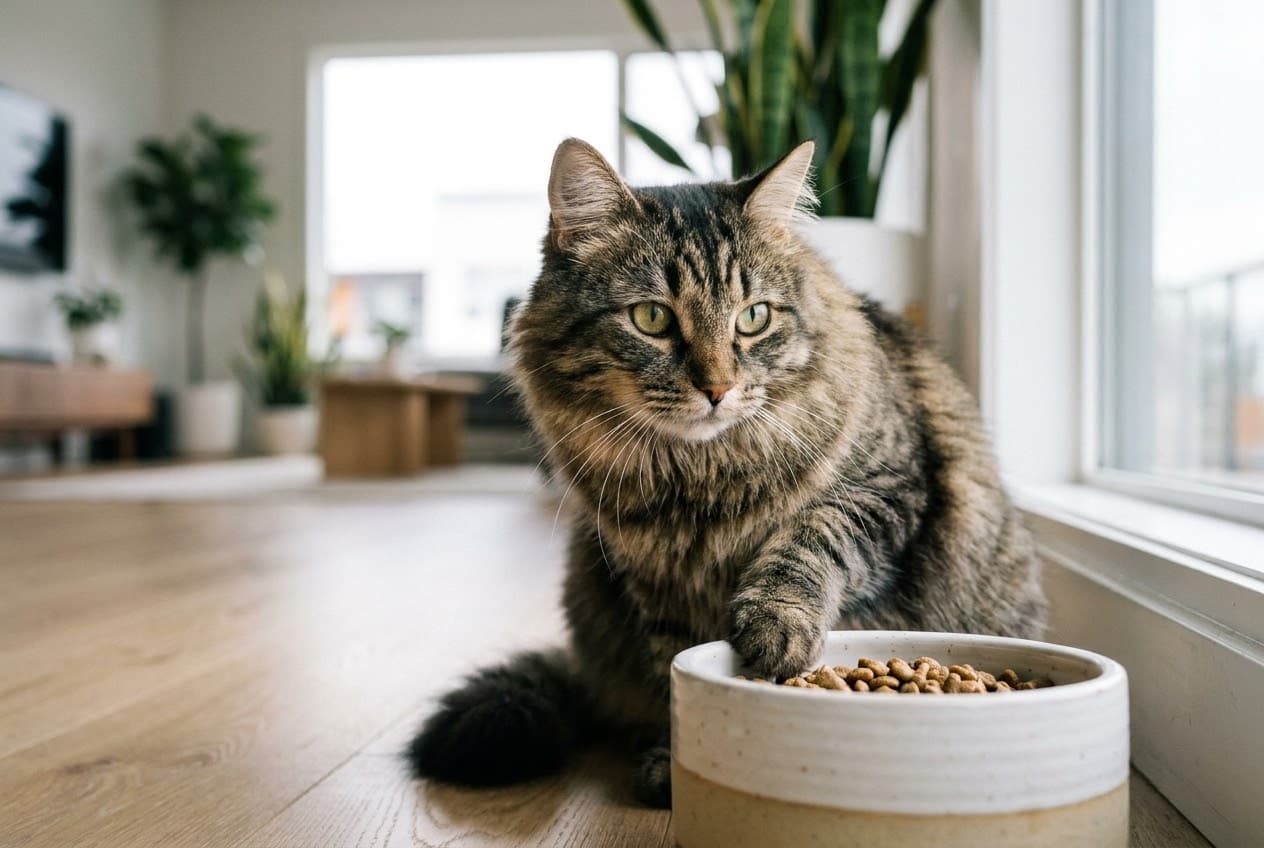

An empty food bowl in the morning is one of those everyday moments that causes instant worry for cat owners. With good reason - in cats, loss of appetite is a particularly important signal. At the same time, cats are genuine gourmets, with preferences that can shift overnight. The line between "fussy" and "genuinely unwell" is not always obvious. Two factors almost always settle it: how long, and what else is going on.
Why cats need especially careful watching
There is a medical reason that loss of appetite gets serious in cats faster than in dogs: hepatic lipidosis, commonly known as fatty liver. When a cat barely eats for several days, the body starts breaking down fat reserves. That fat gets deposited in the liver and can, within a matter of days, tip into life-threatening organ failure. Overweight cats are particularly at risk - paradoxically the very animals you might think would benefit from "a few days without food".
That is why the rule of thumb is: a cat that eats nothing at all for longer than 48 hours needs to see a vet - regardless of other symptoms.
How much "not eating" is normal?
A healthy, not-overfed cat's intake naturally varies. A cat that eats less than usual for a day is not automatically ill. Typical, non-critical triggers for a one-day pause:
- A change of weather or a thunderstorm - many cats are sensitive to it
- New food - taste or texture just does not land
- Stress from change - a move, new furniture, visitors in the house
- Heat - appetite drops naturally in summer
- After sedation or a medical procedure - to be expected
In these cases, check: Is she drinking? Using the litter tray? Playing or seeking contact? If behaviour is otherwise normal, a single day is not cause for alarm.
The structured 48-hour window
A useful practical frame:
0–24 hours: observe
If your cat eats nothing for a day but is still drinking, using the litter tray, and behaving normally, stay attentive without escalating. In the evening, offer a favourite food - small portion, ideally slightly warm (not hot). Warmth strengthens the smell and can prompt appetite.
24–48 hours: time to act
If she still refuses, day two is a different category. A phone call to the practice is appropriate now. Many practices will give an initial read over the phone.
Over 48 hours: vet appointment, not optional
Regardless of how relaxed the cat otherwise seems - someone needs to do a clinical exam. The longer food intake stays at zero, the narrower the window becomes for heading off fatty liver.
Common causes - from the mild to the serious
Dental pain
One of the most commonly overlooked causes. Tartar, a fractured tooth, or chronic gingivitis creates pain on chewing. The typical picture: the cat approaches the bowl, eats briefly, breaks off, and walks away. Or she suddenly prefers soft food. A quick look in the mouth (red gums, an odd smell) is a first clue.
Infections and cat flu
If the nose is blocked, nothing tastes of anything. Cats smell their food before they eat - with a blocked nose, many will refuse the bowl despite being hungry. Any suspicion of cat flu (watery eyes, sneezing, discharge) is a reason to go to the practice.
Metabolic conditions
Kidney disease, diabetes, hyperthyroidism - any of the three can first show up, or tag along, as a drop in appetite. In older cats, always keep them in mind.
Stress and environment
Not to be underestimated. New litter, a moved food station, a new pet in the household, new sounds in the stairwell - cats are sensitive to these shifts. If the reduced eating correlates with a clear change, the environment is worth reviewing.
At home: what to try (and what not to)
Reasonable first steps:
- Warm the food gently (body temperature, not hotter)
- Offer a quiet, undisturbed feeding spot
- Separate water and food - many cats prefer it that way
- Try a favourite treat - a cat that still eats that is not primarily dealing with a medical problem
What not to do: lure with dairy, tuna in oil, or human food. These can trigger diarrhoea or mask a problem that needs looking at.
A cat that refuses her favourite treat is rarely "just not in the mood". That observation alone is enough to justify an earlier appointment.
What you can do today
If your cat has left the bowl untouched today, start a small log: time of the last meal, water intake, activity, litter-tray use, anything else unusual. If nothing improves by tomorrow, you have the perfect basis for a conversation at the practice. Your pet's diary is a good structured place for this.