
Anyone buying dog food in a supermarket or pet shop ends up staring at the same question: why does one bag cost three euros a kilogramme and the next one fifteen? And is there actually a difference that your dog will notice? There is no short answer. There is, however, a structured way to decide.
The basics - what really needs to be in there
A balanced dog food covers about 37 essential nutrients. In Europe, minimum requirements are set by the FEDIAF guidelines. If the pack says "complete food", the food must meet those requirements. "Complementary food", on the other hand, is not enough on its own and has to be combined with something else.
The first thing to read on any pack is the ingredient list. It is sorted by descending quantity. If the top line says "meat and animal by-products (of which 4 percent chicken)", the main component is really unspecified by-products, with chicken there for the label. Good foods are specific: "65 percent beef, of which 45 percent muscle meat, 15 percent organs, 5 percent bone."
Dry, wet, or both?
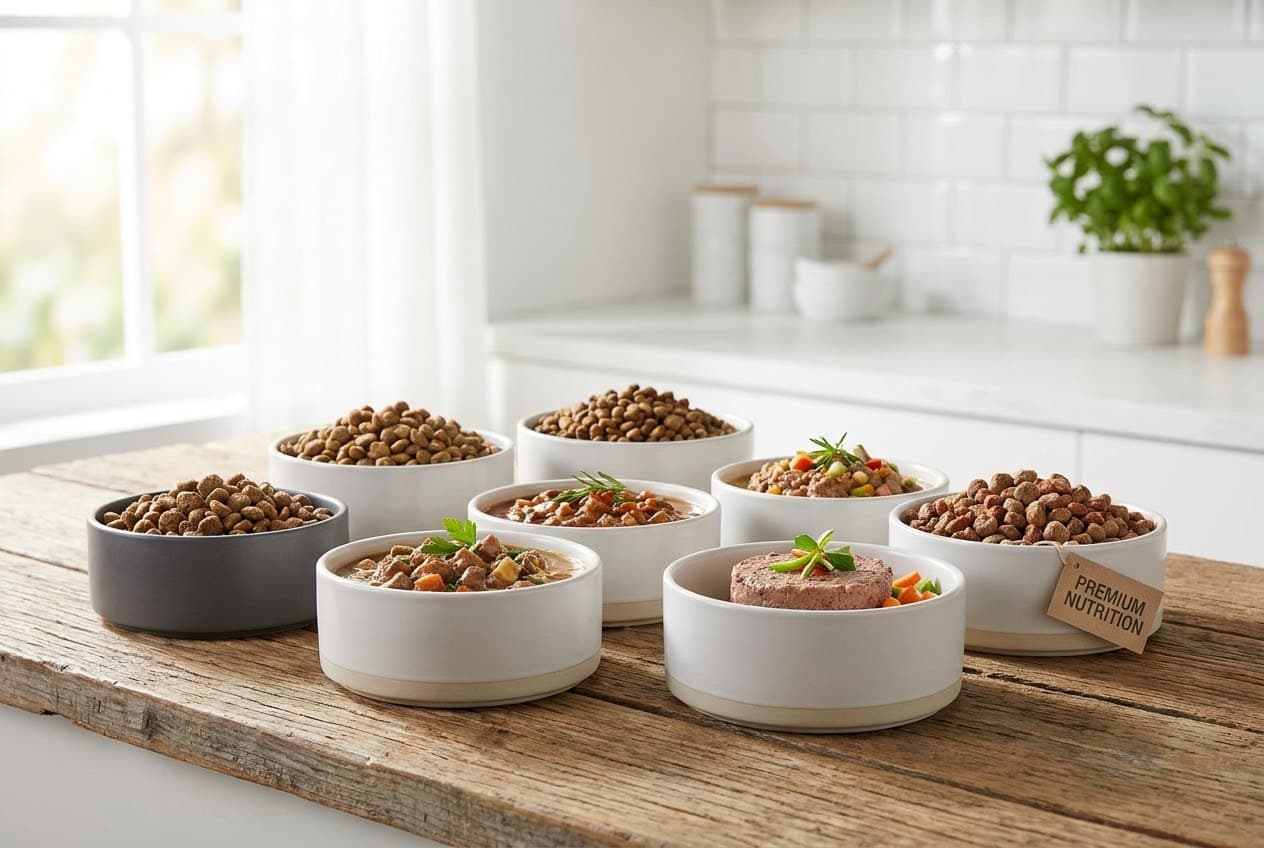
Either can sustain a dog's life. The differences are practical, not moral.
Dry food is shelf-stable, cheap, and good for teeth thanks to the chewing action. The drawback: low water content (8–10 percent), so the dog needs to drink plenty alongside it.
Wet food is around 75 percent water - useful for dogs that do not drink well, or for animals with kidney considerations. It is often tastier and more satisfying per calorie. The drawbacks: more expensive per kcal, not tooth-cleaning, and once opened only lasts a few days.
Mixed feeding (dry in the morning, wet in the evening, or the other way round) is one of the most sensible approaches in practice - you get the advantages of both.
And raw feeding?
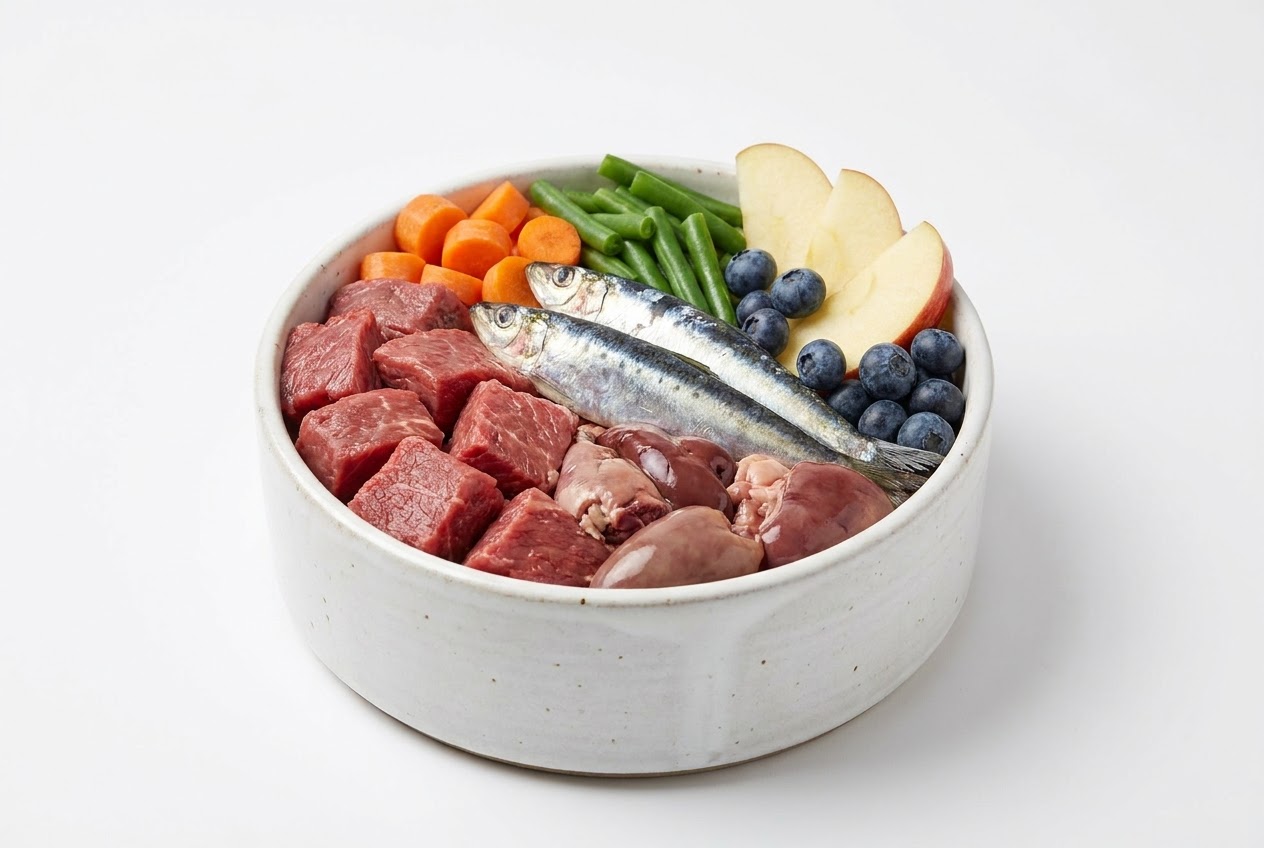
Raw feeding - putting together an uncooked diet yourself - can work, but it takes real knowledge: calorie calculations, the right proportions of muscle meat, organs, bone, fruit, and vegetables, plus targeted supplementation (iodine, vitamin D, omega-3). A raw plan without that analysis is often worse than a solid standard food.
If you want to start raw feeding, have someone with nutrition training draw up a plan, and iterate from there.
The calorie question - a frequent surprise
A typical 15-kilo dog with average activity needs about 700 to 900 kilocalories a day. Your food's packaging states this in grams - work it out at least once. Many dogs pick up over 20 percent of their daily requirement on top of that through treats and table scraps. That, not the main food, is the leading cause of weight gain.
When a special diet makes sense
The shelves are full of them: "sensitive", "joint care", "weight management". Honest assessment: for most healthy dogs, a good standard food is enough. Special diets have their place when there is a medical reason for them:
- Food allergy - hydrolysed-protein or single-protein diet, on veterinary recommendation
- Weight loss - higher protein, less fat, more fibre
- Joint disease - raised omega-3 content (EPA/DHA)
- Kidney or liver disease - phosphate or protein reduced, after diagnosis
These are not wellness products. If your dog needs one, there should be a clear finding behind it, not a vague feeling that it might be helpful.
How your dog tells you the food is working
Over two to three weeks after a switch, watch for:
- Stool: formed, firm enough, not particularly smelly
- Coat: glossy, not greasy, no excessive shedding
- Skin: no itching, no red paws
- Energy: stable across the day, no slumps
- Weight: steady or moving the way you want it to
Digestive hiccups in the first five to seven days are normal - the gut needs time to adjust. If nothing has settled after three weeks, the food is not the right fit.
How to switch food properly
An abrupt swap is almost always the reason for diarrhoea. A seven-day transition tends to work well:
- Days 1–2: 25 percent new food, 75 percent old
- Days 3–4: 50/50
- Days 5–6: 75 percent new, 25 percent old
- Day 7: fully transitioned
What you can do today
Pull out the packaging of your current food and read the ingredient list. Work out the daily calorie count once. Then, for a week, note stool, coat, and energy levels in your dog's diary - those three numbers will tell you more reliably than any marketing claim whether the food is a fit.