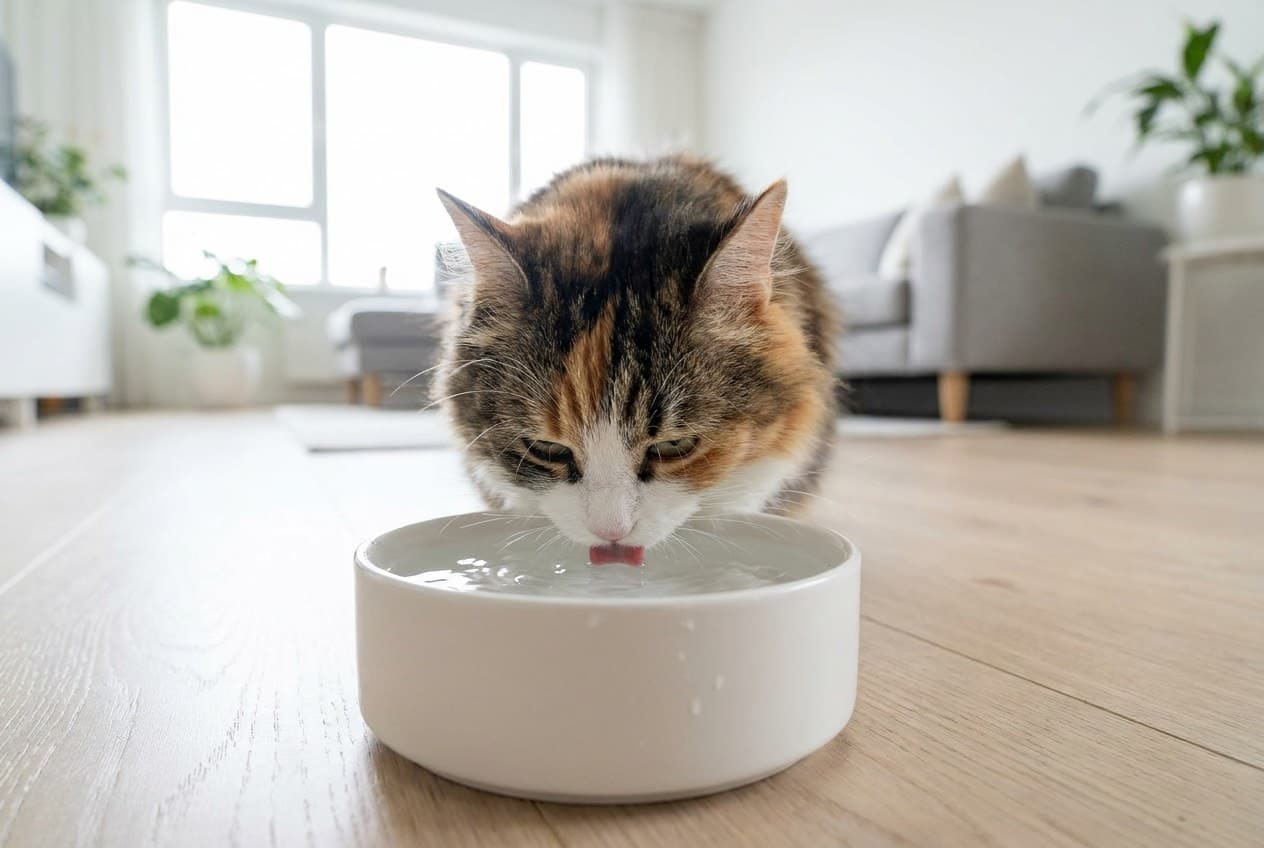

Cats are desert animals - biologically. A healthy, average-sized cat typically drinks between 40 and 60 millilitres of water per kilogramme of body weight per day. For a five-kilogramme cat, that works out to roughly 200 to 300 millilitres once you include the moisture in the food. If you suddenly notice your cat emptying the bowl several times a day, that is a signal worth paying attention to.
The medical term for increased thirst is polydipsia. It almost always travels alongside polyuria - more frequent or larger volumes of urine. Taken together, these are not a condition in their own right but a clue that the body is trying to regulate something.
What counts as "too much"?
A useful rule of thumb: anything over 100 millilitres per kilogramme of body weight per day is above the normal range. For the five-kilogramme cat above, that is anything past roughly half a litre. If you are unsure, measure the daily intake for three consecutive days using a measuring jug - it gives you and us a solid baseline.
Worth noting: cats fed exclusively on dry food will drink noticeably more than cats on wet food or a mixed diet. A sudden rise in intake while the diet has stayed the same is more telling than the absolute number.
The three most common medical causes
In older cats - roughly from the seventh year of life - three conditions account for around 80 percent of all cases of increased thirst.
Chronic kidney disease
By far the most common cause in cats over ten years old. The kidneys gradually lose their ability to concentrate urine. The cat passes more fluid and compensates by drinking more. It is often accompanied by weight loss, a duller coat, and fussier eating.
Diabetes mellitus
Overweight, middle-aged cats are particularly at risk. The body can no longer process sugar correctly, so the kidneys respond by flushing glucose - and a lot of water with it. A classic warning sign: the cat is eating plenty but still losing weight.
Hyperthyroidism
Very common in cats from twelve years on. The metabolism runs hot: the cat seems restless, eats more than usual, and loses weight at the same time. Increased thirst fits the pattern.
Less alarming causes - and when they really are
Not every rise in water intake points to illness. A temporary uptick is perfectly plausible in these situations:
- Diet change from wet to dry food
- Hot days or heavily heated rooms in winter
- Nursing cats in the first weeks after birth
- After physical activity - especially in young, active cats
If the higher intake has a clear, time-limited trigger and settles back within a few days, there is no immediate cause for worry.
What happens at the clinic
A proper workup is not elaborate. Typically we take a blood sample and a urine sample. Bloodwork gives us a look at kidney function, blood sugar, and thyroid hormones. The urine is checked for concentration, sugar, and protein. Between the two, a clear direction often emerges.
If anything remains unclear, the next steps are an abdominal ultrasound or - if diabetes is suspected - a fructosamine test, which reflects average blood sugar over the past two to three weeks.
What you can do at home - before your appointment
Over three to five days, note down:
- daily water intake in millilitres
- current body weight (in the morning, before feeding)
- food amount and type
- any notable behaviour (sleep, activity, grooming)
These numbers save us guesswork and move the diagnosis along considerably faster. If you already keep a diary for your cat, you have a head start.
The most important sentence in feline medicine: cats hide illness for a long time. By the time behaviour shifts visibly, the problem is usually not brand new.
What you can do today
Measure your cat's water intake over the next three days and record their body weight. If the number comes in clearly above 100 millilitres per kilogramme, or if any of the warning signs show up, arrange an appointment soon. You can keep these readings structured in your pet's diary and share them with your vet when you go in.