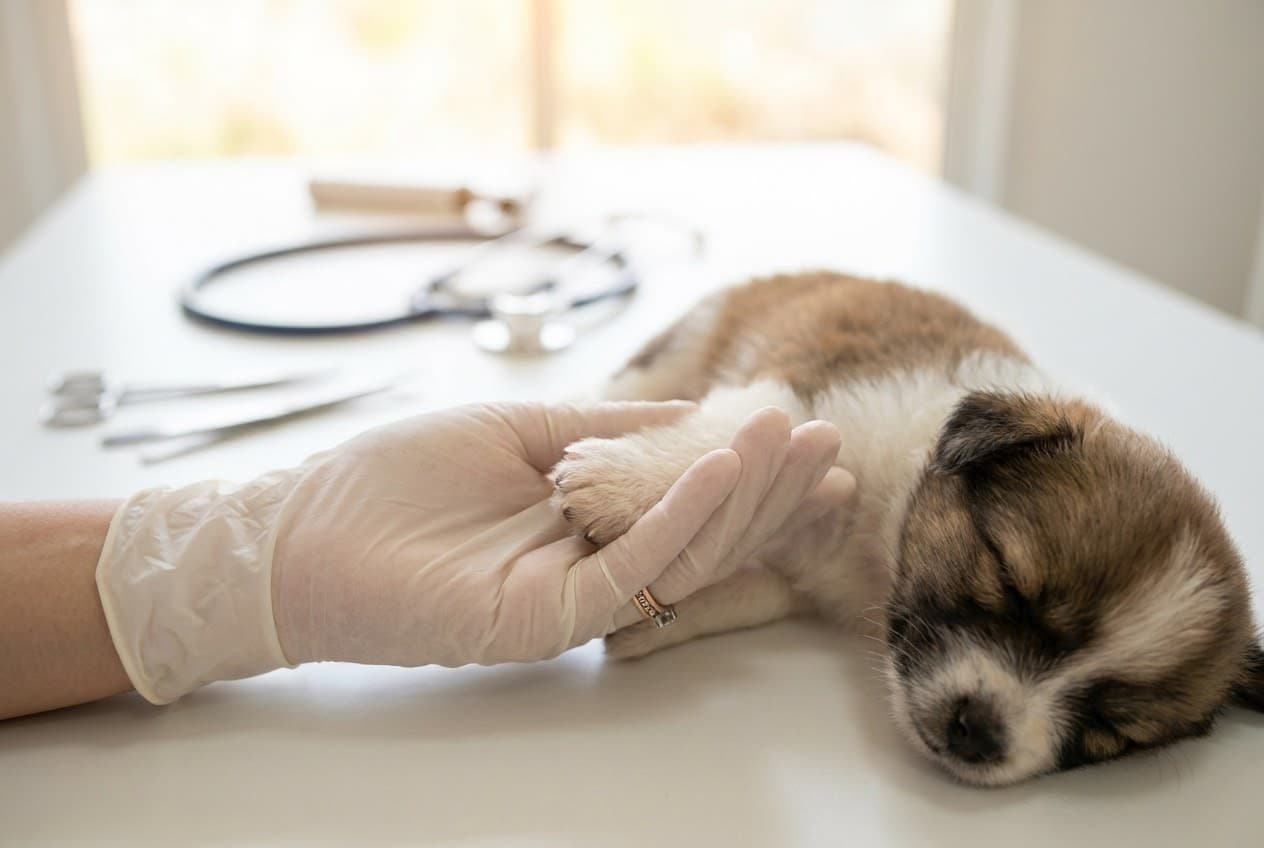

The most important medical foundations for a dog's life are set in the first four months. The vaccination calendar sounds bureaucratic, but in practice it is manageable - once you have it laid out cleanly. What follows is based on the current guidelines of the German Standing Veterinary Vaccination Commission (StIKo Vet), and is intended as a framework rather than a rigid recipe. Your vet will talk through the specific application with you.
Core versus non-core - the distinction that matters
Vaccinations fall into two categories.
Core vaccinations protect against diseases that are life-threatening or widespread in your region. Every dog should receive them.
Non-core vaccinations are recommended when a specific risk applies - frequent travel, close contact with other dogs, or certain regional factors.
The core group for dogs in Germany
- Distemper (Canine Distemper Virus)
- Parvovirus
- Canine infectious hepatitis (CAV)
- Leptospirosis (classified as core in Germany - not universally so)
- Rabies (not mandatory for dogs staying in the country, but required for any border crossing)
The classic schedule in year one
A typical primary course looks like this. Your puppy is seen at the following points:
Week 8: initial vaccinations - distemper, parvo, CAV, leptospirosis. Often this first round is already given by the breeder; make sure you receive the vaccination record.
Week 12: repeat of the core components, plus the first rabies vaccination.
Week 16: final booster of the core vaccinations. This appointment matters more than many people realise - up until the fourth month, maternal antibodies can partly block the response to the vaccine. The 16-week dose is essentially the "insurance" that the primary course actually took.
Month 15: first follow-up booster, completing the primary course.
After that - repeat intervals
For distemper, parvo, and CAV, current guidance is a booster every three years. Leptospirosis and rabies are usually boosted annually. These intervals are longer than they once were and are based on solid immunity studies from the last fifteen years.
Non-core vaccinations worth knowing
Kennel cough (parainfluenza / Bordetella)
Sensible if your dog goes to a boarding kennel, group training, or day care. Many providers require it.
Lyme disease
The recommendation here is medically contested. In regions where Lyme is common (southern Germany, the north-east), it can make sense. It never replaces daily tick prevention.
Herpes (breeding bitches only)
Specific to bitches being bred - not relevant for family dogs.
What to check before every appointment
A healthy puppy tolerates vaccinations with few issues. Tired for a day, a tender injection site, maybe a slightly raised temperature - all expected.
Vaccination should be postponed if your puppy:
- has a fever (above 39.2 °C)
- shows acute diarrhoea or signs of infection
- is mid-course on worming treatment
- has recovered from a serious illness in the last two weeks
In those cases the appointment is pushed back - that is not a setback, it is correct medical practice.
The vaccination passport as a document
The EU pet passport is your most important document. It carries the microchip number, vaccination entries, and everything you need for travel. Two rules: never leave it in a glovebox in summer (heat damages the paper), and always keep a digital copy of every page.
If you lose the passport, a duplicate can be issued - but not all historical entries can be fully reconstructed. A two-minute photo on your phone is the cheapest insurance there is.
What you can do today
Pull out your puppy's vaccination record and check three things: Is the primary course complete (all three or four appointments)? When is the next booster due? When was the last worming treatment? Put the next two due dates in your calendar today - or use the vaccination reminder in your pet profile.